


Generally
This page addresses general Trade rules that may apply when executing a Trade. There are separate pages that address the following, more complex Trade topics:
- Traded Player Exceptions;
- Trade Salary (Trade Math);
- Trade Bonus;
- Sign-and-Trade / Extend-and-Trade.
Roster Spot Requirement
If a Team is acquiring more Players than it is sending out, then the Team must have an open Roster Spot to absorb the additional Player(s) prior to executing the Trade.
Note that a Team can request a Player to be waived and the roster spot will be opened before he clears waivers (they don’t have to wait).
Tradeable Assets
It’s important to note what counts as an “asset” in a Trade. This becomes particularly important in 3+ Team Trades when the Touch Rule comes into play and Teams just want to send something to another Team to satisfy the rule.
What is a Tradeable Asset depends on whether it’s a 2-team Trade or 3+ Trade.
Two-Team Trades
Must send and receive at least one of the following:
- Player Contracts;
- Draft Pick (protected up to 55 picks);
- Draft rights to an NBA Prospect;
- Swap Rights;
- Cash-in-Trade (must be $110,000).
3+ Team Trades
Must send and/or receive one of the following from two or more Teams:
- Player Contract;
- Draft Pick that actually conveys (can’t extinguish);
- Draft Rights to an NBA Prospect;
- Cash-in-Trade (must be $1,100,000 cash).
NBA Prospect
Defined as a Player (i) with a reasonable possibility of signing an NBA Contract during his career, or (ii) a starter/rotation Player in a reputable professional league.
Shall automatically be deemed an NBA Prospect if drafted in one of the three previous drafts.
Shall automatically be deemed a contributor in a reputable professional league if drafted in one of the five previous drafts.
Conditioned Draft Pick Time Limitation
A conditional Draft Pick will not be considered a tradeable asset if the following elements are met:
- Conditional pick is conveyed after 6:00 P.M. E.T. on the day prior to the first day of the Regular Season;
- The conditional pick is for the Draft Immediately following the Regular Season; and
- The obligation to convey the pick is extinguished if not conveyed in the upcoming Draft.
Team A trades its 2026 2nd Round Pick to Team B, provided that such pick is not among the top 55 picks in the 2026 Draft. If it falls in the top 55 picks, then Team A’s obligation to convey a 2nd Round Pick is extinguished.
If the Trade is consummated after 6:00 P.M. E.T. on the day prior to the start of the Regular Season, then this is not considered a tradeable asset and won’t satisfy the Touch Rule.
The Touch Rule
When three or more teams are included in a Trade, each team involved in the Trade must touch at least two other teams.
A touch is either sending or receiving one of the tradeable assets listed in the list above.
Hypothetical #1
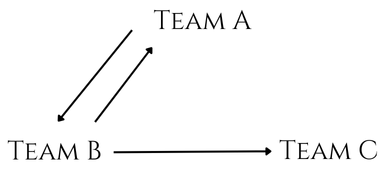
Team A trades a Player Z to Team B. Team B trades a 2028 1st round pick to Team A. Team B trades a Player Y to Team C to have enough outgoing Trade Salary to satisfy a Traded Player Exception.
This would not satisfy the Touch Rule.
Team A: Touching Team B, but not Team C;
Team B: Touching Team A and Team C, satisfying the Touch Rule;
Team C: Touch Team A, but not Team B.
Hypothetical #2
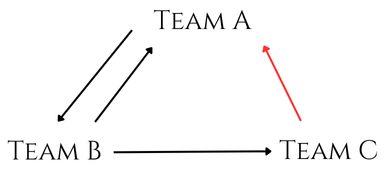
The same trade as above, but now Team C sends a protected 2029 2nd round pick to Team A in addition to all other trade terms.
This now satisfies the Touch Rule.
Team A: Touching Team B and Team C;
Team B: Touching Team A and Team C;
Team C: Touching Team A and Team B.
Example 1 one does not satisfy the touch Rule as each Team only touches one of the other Teams:
Team A: Received an asset from Team B, sen
In Example 2, Team C is now sending an asset back to A. Now the Trade does satisfy the Touch Rule, as each Team is touching the other.
Trading Draft Picks
Draft Picks Generally
Note that the trading of Draft Picks is different than trading the Draft Rights to a Player. Draft Rights are attached to a Player that has been drafted, but is not yet signed.
Trading future Draft Picks requires the Team to identify the specific year of the pick–with the exception of pick protection contingencies–and the Team must already hold the right to the pick (i.e. cannot identify a pick as one that may be acquired in the future).
Pick Protections
Pick Protections Generally
Teams may make the conveyance of a pick contingent on where the pick is ordered in the Draft, called pick protection.
If a pick does not convey due to protections, additional contingencies can be added for the conveyance of a different pick or picks in the future, so long as specific years are identified.
As part of a Trade, the Warriors conveyed to the Wizards its 2030 1st Round Pick, protected if it is picks 1 through 20. If it is picks 1 through 20, then the Warriors will instead convey a 2030 2nd Round pick to the Wizards.
Protections and the Stepien Rule
All protections must still satisfy the Stepien Rule, discussed in more detail below.
Protecting an Acquired Pick
A Team may add protections to a Draft Pick it had acquired from another Team in a prior Trade, subject to the following:
- The Team must hold the Draft Pick unconditionally; or
- The Team initially held the Draft Pick unconditionally, but entered into a separate Trade that had added pick protections.
For example, Team A acquires the 2029 2nd Round Draft Pick from Team B unconditionally. Then conveys it in the following way: “Team A conveys a 2029 2nd Round Draft Pick (Team B’s own) to Team C, provided that it is not among picks 31-45.”
In a subsequent Trade, the pick is conveyed in the following way: “Team A conveys a 2029 2nd Round Pick (Team B’s Own) to Team D, provided that it is not among picks 46-60.”
Deferral Options
One or both Teams to a Trade may be permitted to exercise a one-time option to defer the conveyance or the receipt of a pick for one year only.
In 2019, as part of the Anthony Davis Trade, the Pelicans received the right to the Lakers’ 2024 1st Round Pick, with an additional right to defer that right until 2025. The Pelicans did indeed defer the pick until 2025.
Both deferral and pick protections cannot be used at the same time.
The “Stepien” Rule
The 7-Year Rule
Both First and Second Round Picks can only be traded no later than the 7th Draft following the date of the Trade.
Missing Consecutive 1st Round Picks
A Team must never have the possibility to not have a First Round Pick in two consecutive Seasons. Therefore, if a protection creates the possibility, then it is prohibited.
A Team may own another Team’s Draft Pick to satisfy the Stepien Rule.
As of the 2025 Offseason, the Suns no longer have their own 2026 or 2027 First Round Picks. However, because they own the least favorable First of Utah, Cleveland and Minnesota in 2026, the Stepien Rule is satisfied.
Conditional Language to Satisfy Stepien Rule
If it is unclear if/when a Draft Pick is going to be conveyed because of pick protections, then the following language can be used to satisfy the Stepien Rule:
- “Team A conveys its own 1st Round Pick to Team B in the second Draft following the Draft in which Team A is required under the terms of [a prior trade] to convey its 1st Round Pick to [Team involved in prior trade].”
However, a Team can only have two of these types of conveyances in effect at one time.
The language is not permitted if the year of the conveyance could occur in violation of the 7-Year Rule.
Cash-in-Trade
Cash-in-Trade Generally
A Team can send and receive 5.15% of the Salary Cap as Cash-in-Trade each Salary Cap Year ($7,964,320 for 2025-2026).
Each amount that is sent and received are accounted for separately and added on throughout the Season (i.e. it is not the “net” amount sent and received).
Cash-in-Trade only effects the owner’s bottom line and has no effect on Team Salary.
Conditional Cash-in-Trade
When Cash-in-Trade is included in a Trade as an alternative to the conveyance of a potential Draft Pick, then the accounting for the Cash-in-Trade is for the year the Trade was consummated, not when the cash was exchanged.
For example, Team A and Team B agree to a Trade where Team B send Player to Team A. Team A agrees to send a 2026 1st Round Pick to Team B, but it is conditional on not being a lottery pick. If it is a lottery pick, then Team A instead gives $5 million to Team B. Although the money would be exchanged in 2026, the $5 million Cash-in-Trade would be accounted as sent and received in 2025.
If the conditional Draft Pick is subsequently traded again, you again account for the Cash-in-Trade at the time of the Trade.
Taking the example above, Team B then takes the conditional Draft Pick and trades it to Team C in 2025. Team B now has lowered the amount it can convey by $5 million and Team C has lowered the amount it can receive by $5 million. Nothing changes from the first Trade, meaning Team A still lowers the amount it can convey by $5 million and Team B lowered the amount it can receive by $5 million.
Payment of Bonuses
Depending on the type of bonus, the Sending Team or Receiving Team will be responsible for payment, which may be different than how Bonuses affect Team Salary (i.e. one Team may be responsible for paying a bonus while it’s added to the Team Salary of the other Team).
Signing Bonus
If a Signing Bonus is provided in a Contract as part of a Sign-and-Trade, then it is the responsibility of the Receiving Team. Any payment of the Signing Bonus by the Sending Team is considered a Cash-in-Trade and is governed by those rules.
Performance Bonus
Any Performance Bonus earned is considered the responsibility of the Receiving Team to pay.
The Teams can agree that the Sending Team pay all or a portion of the Performance Bonus, but any payment by the Sending Team is considered Cash-in-Trade and is subject to those rules above, and is accounted for at the time of the Trade, not when the Bonus is earned.
For example, Team A trades Player to Team B. Player has several performance bonuses in his contract reaching a total of $1 million. Team B is responsible for the payment of these Bonuses. Team A agrees to pay 25% of the Bonuses. Therefore, $250,000 is reduced from Team A’s allowable conveyance of Cash-in-Trade at the time of the Trade, and $250,000 is reduced from Team B’s allowable receipt of Cash-in-Trade at the time of the Trade, irrespective if the Player achieves the performance benchmarks.
Other Incentive Compensation
For other types of Incentive Compensation (i.e. conditioning, academic achievement, extra promo appearances), the Team that rostered the Player when the Bonus was earned is responsible for payment.
Similar to Performance Bonuses, the Teams can alter the payment arrangement, subject to the Cash-in-Trade rules.
Trade Bonus
Trade Bonuses are paid by the Sending Team, but are added as Team Salary to the Receiving Team (visit the Trade Bonus page to view how the Trade Bonus is calculated).
Again, Teams can agree to a different payment arrangement of the Trade Bonus, subject to the Cash-in-Trade rules.
Options – Conditioned to Trade
The Player and Sending Team can agree to amend a Contract to exercise or not exercise an Option provided that the Contract is traded within 48 hours of executing the amendment.
Effect on Bird Rights
Generally, when a Player is Traded, the Receiving Team retains the same Bird Rights the Sending Team had.
During the 2023-24 season, the Raptors traded Pascal Siakim to the Pacers. Since the Raptors had his Full Bird Rights, they transferred to the Pacers in the trade. That summer when Siakim became an Unrestricted Free Agent, the Pacers used Full Bird Rights to sign Siakim over the Salary Cap to a maximum contract at 30% of the Salary Cap.
Exception – Bird Rights do not transfer and he is treated as if signing as a Free Agent if the following elements are met:
- Signs a 1-year contract (excluding any Option Year);
- Would become a Full Bird or Early Bird Free agent under the Contract after completing such Contract; and
- Is traded to a new Team without exercising any applicable Option for the second year.
Because of this downgrade in Bird Rights, the Player receives an Automatic No Trade Clause (oftentimes called an “Implicit” No Trade Clause) upon the signing of his Contract, unless waived or the option is exercised.
Limitations on Extensions
If a Team acquires a Player they must wait 6 months before signing him to an Extension that (i) covers 5 Seasons, (ii) provides for increases/decreases greater than 5%, or (iii) Renegotiates his current Contract.
This is to avoid working around CBA restrictions. Extend-and-Trade rules limit signing a Player to 5 Seasons and 5% raises. This rule restricts the “handshake deal” where the Player gets traded and then immediately signs to an Extension with more favorable terms.
Team Salary and Trades
The Receiving Team will acquire the entire Salary for the current Season and future Seasons of the Player’s Contract in the Trade.
The current Season’s Salary is not prorated if the Player is traded midway through the Season.
Resigning a Traded/Waived Player
If a Team trades a Player and the acquiring Team subsequently waives the player, the Sending Team can’t sign him to a new Contract until the earlier of: (i) 1 year following the date all conditions to the Trade were satisfied or (ii) the July 1 following the last Season of the player’s Contract.
Existing Financial Obligations of Sending Team
Prior to the the assignment of any Player Contract, a Team must divest itself of any financial arrangements with the Player other than any Loans or Compensation earned prior to assignment.
The Sending Team will be responsible for paying Salary through the day of the assignment unless he dresses for the Receiving Team on that day.
Trade of Exhibit 10 Contracts
If (i) a Team has a G League Affiliate, (ii) acquires by assignment an Exhibit 10 Contract, (iii) the Contract has a Conversion Protection Amount, but not an Exhibit 10 Bonus, then the Contract is deemed to include an Exhibit 10 Bonus in an amount equal to the Conversion Protection Amount.
Stacking Minimum Contracts
In certain scenarios, a Team is limited in the amount of Minimimum Contracts it can send out in an unbalanced Trade. This is addressed in the Traded Player Exception page.
Publicly Demanding a Trade
Any Player or agent who publicly expresses their desire to be traded shall be subject to a fine and/or suspension, with a maximum fine of $150,000.
No Trade Clause
Express No Trade Clause
A Contract may include a No Trade Clause only if the Player (i) has 8 YOS and (ii) has rendered 4+ YOS for the Team he’s entering into the Contract with.
If so, the Contract may contain a prohibition or limitation of such Team’s right to trade the Contract to another NBA Team.
Automatic No Trade Clause
A Player receives an Automatic No Trade Clause (oftentimes referred to as an “Implicit” No Trade Clause), thus requiring his consent to be traded, if his Bird Rights would be reduced as a result of the Trade.
The Player may elect to waive the Automatic No Trade Clause at the time of signing (or anytime during the life of the Contract).
If there is an Option in the contract, the Option may be invoked to remove the No Trade provision.
In the 2023 offseason, D’Angelo Russell signed a 2-year, $37.4 million Contract with the Lakers. His Contract had a Player Option. Therefore, if traded he would subject to a reduction in his Bird Rights. Russell elected to waive his Automatic No Trade Clause at the time he signed the Contract. He was eventually traded to Brooklyn during the 2024-25 Season.
Bird Rights Reduction
Bird Rights are downgraded if the following elements are met:
- Signs a 1-year contract (excluding any Option Year);
- Would be a Full Bird or Early Bird Free agent under the Contract after completing such Contract; and
- Is traded to a new Team without exercising any applicable Option for the second year.
During the 2025 offseason, Cam Thomas was a Restricted Free Agent with the Nets. Reports indicated that Thomas was offered a 2-year deal and a 1-year deal for more money if he waived his Automatic No Trade Clause. Thomas opted to sign his $5.9 million Qualifying Offer to keep his No Trade Clause in place, ensure his Bird Rights were retained with the Nets, and allow himself to choose his destination if traded during the Season.
Trade Restrictions
Date Restrictions
July Moratorium
Trades cannot be made during the July Moratorium from July 1st through July 6th.
Trade Deadline
Trade Deadline Date
February 5, 2026
Trade Deadline Rule
No Trades can be executed from the second Thursday before the All-Star Game until after the Team’s Regular Season ends.
Playoff Teams cannot trade any Player on its Playoff Roster until the Team is eliminated from the Playoffs, but can Trade any other assets after the Regular Season.
During the 2025 Playoffs while making their run to the NBA Finals, the Pacers executed a Trade with the Pelicans, sending the Draft Rights to Mojave King and its 2025 1st Round Pick to the Pelicans in exchange for a return of its own 1st Round Pick in 2026. Because King was not on the Playoff Roster, the Pacers could trade him while still in the Playoffs.
Entering Option Year
If a Contract could be the last season of a Player’s Contract based on the exercise or non-exercise of the Contract (Option or ETO), then the Player cannot be traded after the Regular Season unless the Option is exercised or the ETO is declined.
Note an Option can be exercised as a condition to being traded, as discussed above.
In June 2023, Kristaps Porzingis had a pending Player Option for the 2023-24 Season with the Wizards. The Wizards could not trade him with the pending Option. Porzingis exercised his Player Option to allow the Wizards and Celtics to execute the three-team trade with the Grizzlies.
Sign-and-Trades
Any Sign-and-Trade must be completed prior to the Regular Season (for visit the Sign-and-Trade page for all rules on Sign-and-Trades).
Draft Picks
The deadline for trading the current Season’s Draft Picks is 2:00 P.M. ET on the day of the Draft.
Once the Draft begins, the Teams can begin trading the Draft Rights to the Players that are drafted.
Lottery picks cannot be traded from 6:00 P.M. ET the day before the Draft Lottery until the Draft Lottery concludes.
Transaction Restrictions
Below are the transactions that trigger a time restriction on trading a Player for a particular timeframe.
| Signings | ||
| Transaction | Details | Restriction |
|---|---|---|
| 1-Year Deal |
| Automatic No Trade Clause created unless waived |
| Bird Rights Contract |
|
The later of (i) three months or (ii) January 15th |
| Veteran Extension (other than Designated Veteran Extension) |
|
Six months |
| Renegotiation | N/A | Six months |
| Designated Veteran Contract or Extension | N/A | One Year |
| Restricted Free Agent | If Offer Sheet is matched | Team issuing Offer Sheet: One Year (consent not allowed); All Other Teams: One Year but Player can consent to Trade |
| Drafted Rookie Signing | Once Rookie is signed (but not the rights to the rookie prior to signing) | Thirty days |
| Two-Way Contract Signed | N/A | Thirty days |
| Any other Free Agent Signing Not Listed | N/A | The later of (i) three months or (ii) December 15th |
| Two-Way Converted to Standard Contract | N/A | The later of (i) three months or (ii) December 15th |
| Trades | ||
| Transaction | Details | Restriction |
| Trade | N/A | Sending Team cannot reacquire Player in same Season (restriction is eliminated if Player is traded again and waived by the third team) |
| Sign-and-Trade (non-base year compensation) | Acquired via Sign-and-Trade | The later of (i) three months or (ii) December 15th |
| Sign and Trade (“Base Year” Compensation Player) |
|
The later of (i) three months or (ii) January 15th |
| Acquired Using Exception | Restriction does not apply if:
|
Cannot be aggregated in another Trade for two months from initial acquisition. |
| Waivers | ||
| Transaction | Details | Restriction |
| Waiver Claim during Season | N/A | 30 days |
| Waiver Claim during Offseason | N/A | First 30 days of Regular Season |
Completing a Trade
Trade Call
Below are the steps for completing a Trade:
- Notify the League at least two hours before an impending Trade, if possible. League must be notified by 6:00 P.M. ET on Friday to perform a Trade Call on the weekend, otherwise it must wait until Monday (same rule applies for holidays).
- Prior to the Trade Call, the parties exchange necessary health information.
- All terms and conditions of the Trade are disclosed and agreed to during a conference call with the League.
- Follow up email confirming the terms will be sent by the Teams to the League.
- League will send an email confirming all conditions required for Trade to be consummated.
Physical Exam Contingency
Any Trade can be conditioned upon the Player passing a physical examination.
In 2024, Mark Williams was traded to the Lakers from the Hornets. However, he failed his physical exam, and as a result the Lakers rescinded the Trade.
Sometimes, rather than cancelling the Trade, Teams will adjust the terms based on the results of a physical examination.
In 2025, the Blazers initially had an agreement to send Anfernee Simons and two 2nd Round Picks to the Celtics for Jrue Holiday. After poor results from Holiday’s physical exam, the Blazers and Celtics agreed that the 2nd Round Picks would be dropped from the agreement.
Note that the Williams Trade above had no chance of altering the Trade because it was made right at the deadline. Once the physical exam results came back, they were past the Trade Deadline and therefore couldn’t alter the terms and execute a new Trade.
Trade of Team Personnel
The Trade of Team Personnel (e.g. a coach or G.M.) is permitted, but is limited to the Trade of future Draft Picks or cash, and is subject to the rules that apply to such Trades.
In 2013, the Celtics agreed to release head coach Doc Rivers from his current Contract to allow him to sign with the Clippers, in exchange for a 2015 1st Round Pick.